
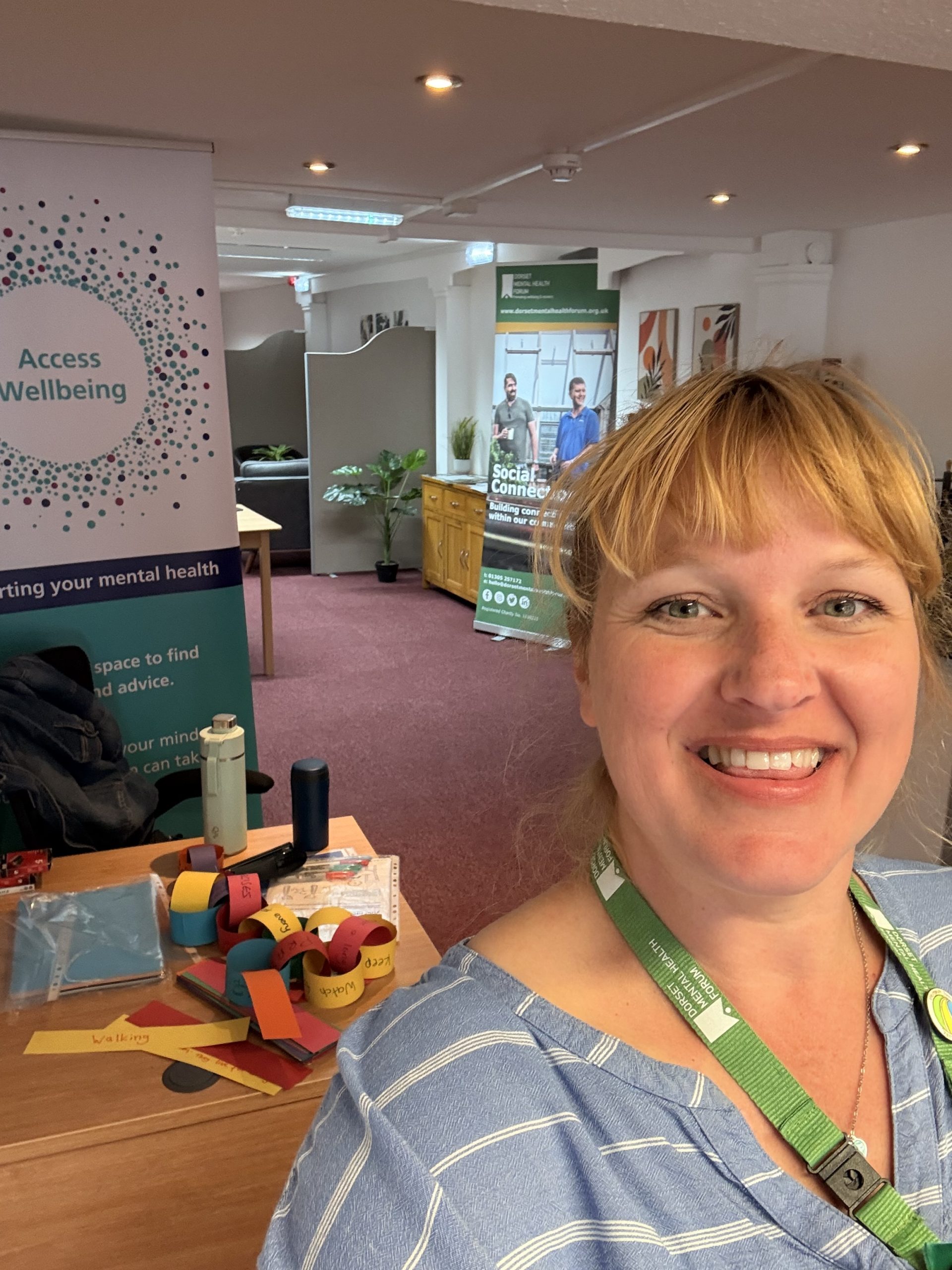
Access Wellbeing hubs bring together a range of organisations to help people access practical and emotional support in their local community. As part of this wider partnership, Forum peers regularly attend drop-ins to offer peer support, share their lived experience and help people connect with services.
We spoke to Tia, a Dorset Mental Health Forum peer specialist working within Access Wellbeing Weymouth, about her role, the support people are looking for, and why community spaces like this make such a difference.
Can you tell us a bit about yourself Tia, and how you came to work as a peer, alongside this service?
I have been working for the Forum for a good while. I work in many capacities such as the Recovery Education Centre, with our Sports and Social groups, with Hospital to Home, Steps2wellbeing and the local Community Mental Health Team. Access Wellbeing Weymouth is a hub offering support to people around a variety of factors affecting their wellbeing, and so the perfect place to link in their services with ours.
What does a typical day look like for you in the drop-in service?
It can be really varied. From having people come to see me while I am there to discuss the support we offer, to Wellbeing Coordinators linking in with me while they have people visiting and to spending some time discussing mental health and what we do with various organisations that might be around. Plus it’s a space where I learn more about what people are experiencing with their mental health and the support that’s out there as well as using my own experiences to offer some insights.
What kinds of support do people usually come in looking for?
Everyone’s experience can be complex. I see a lot of people struggling with housing, job insecurity, financial strain but also loneliness and feeling helpless with their mental health condition/s. A lot of people also have physical issues alongside their mental health and it’s all impactful. Often they need a network that’s safe and people who care enough to help hold them while they’re struggling. Offering guidance from form filling, to knowing what social connections are available. What therapies might work to how to navigate all the issues going on.
Can you share an example of a moment really stuck with you?
I can’t think of a single moment, but there have been times when I’ve been really impressed by how kind and caring the Wellbeing Coordinators have been when people have turned up with a dilemma or situation. They’re quick to offer instant help and offer it in a space that’s safe and with their full attention.
Why do you think spaces like this are important in the community?
They offer people safety as well as a place to offload all the complicated things going on and not feel like you have to deal with things alone. It’s accessible and always there. So people will know that whatever they’re going through there is a team and many organisations around that team ready and waiting to help. Hopefully that will mean people aren’t sitting alone with their struggle.
Tell us something about Access Wellbeing that you think more people should know?
That it really is a place where people want to help, where the teams will not judge you or make you feel bad. They will actually listen and care. They want to help you and if they can’t help they will passionately find the right organisation and the right people that can help. If everything feels lost and everything feels too much. It’s worth the risk to try this service and find out.
You can find the current locations of Access Wellbeing hubs and drop-ins on their newly revamped website, now featuring a handy postcode search function.